An AI-Empowered Artist Workflow
Role: Art Director / Artist | Company: Everi, IGT | Years: 2024-2026 | Focus: AI-Assisted Visual Development, Art Direction, Workflow Design
Challenge
When generative AI started becoming useful for game art, the business appeal was pretty obvious. You could explore ideas, styles, characters, environments, and color directions incredibly fast.
For me the question wasn’t “should we use it?” – it was “…how?”
I didn’t want a process where an artist typed a sentence, picked the prettiest result from a bunch of random dice rolls, and called it good. We still needed authorship. Taste. Art fundamentals. Reproducibility. Legal guardrails. Artists should still be making decisions throughout the process – keep the experts in control of their work.
So I started experimenting.
Starting With Art
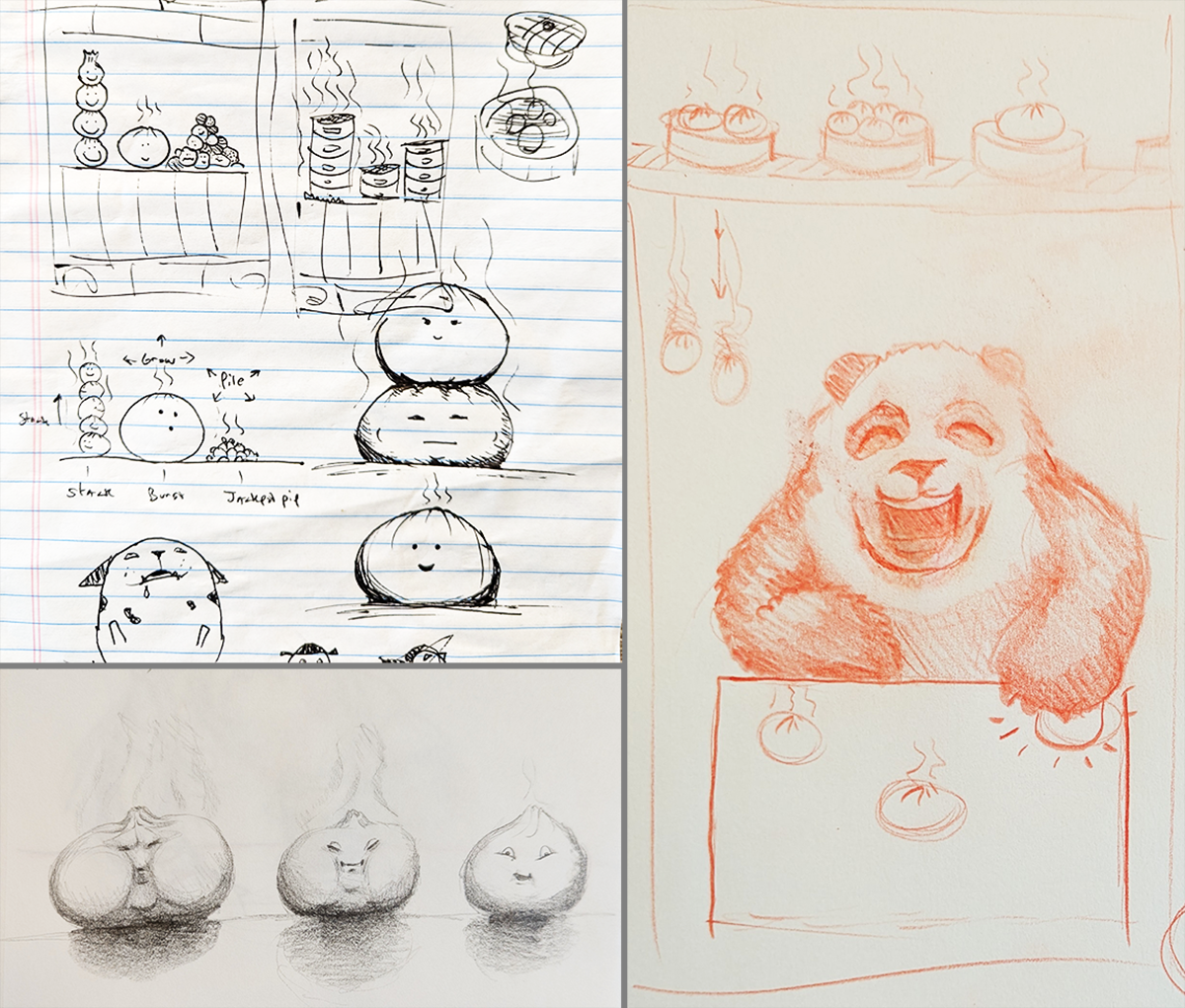
One of my early tests came from a game idea that I had, built around a hungry panda and steamed baozi.
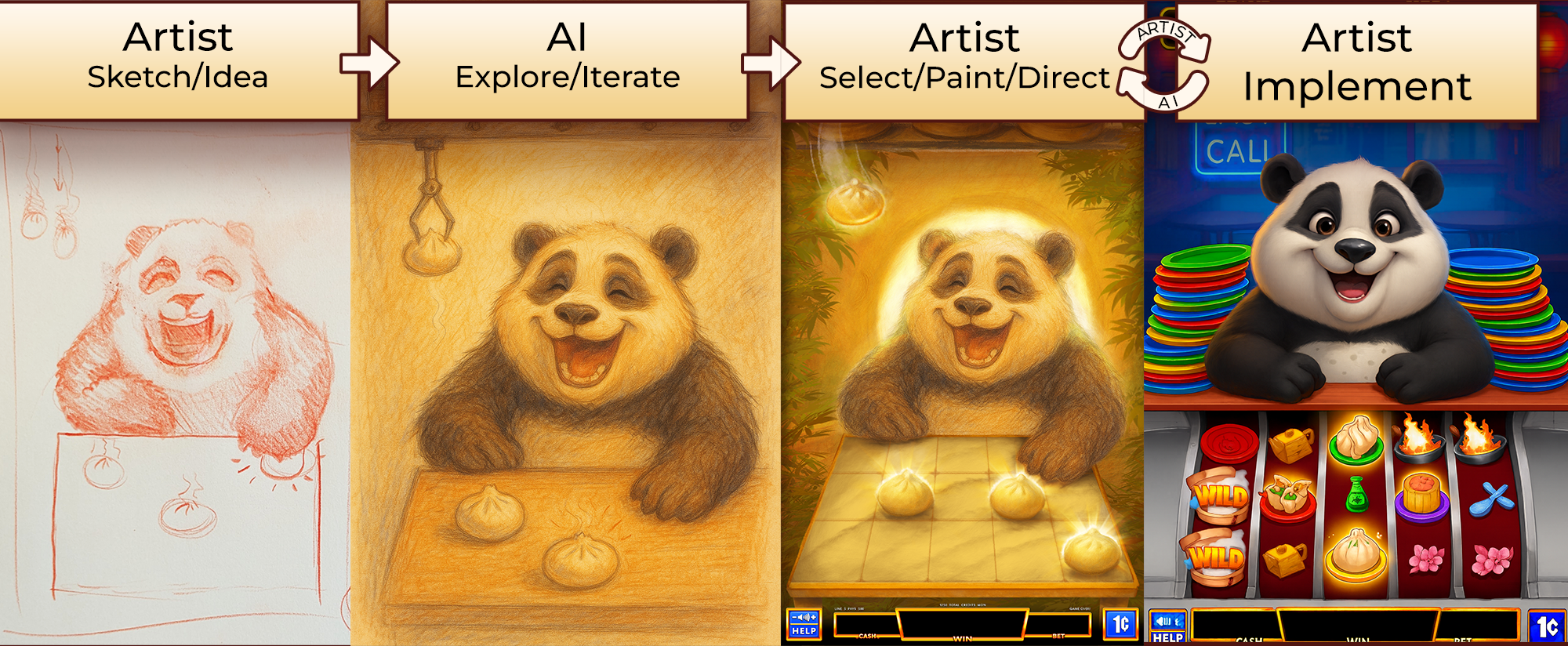
Before even touching AI, I grabbed a pencil.
I sketched the mechanic. Buns stacking, growing, being grabbed and eaten. I drew little bao characters. Then I started exploring the Panda himself and how he might interact with them.
None of it was precious. It was just me thinking on paper. But the idea existed before the AI did anything with it.
Collaborate with AI
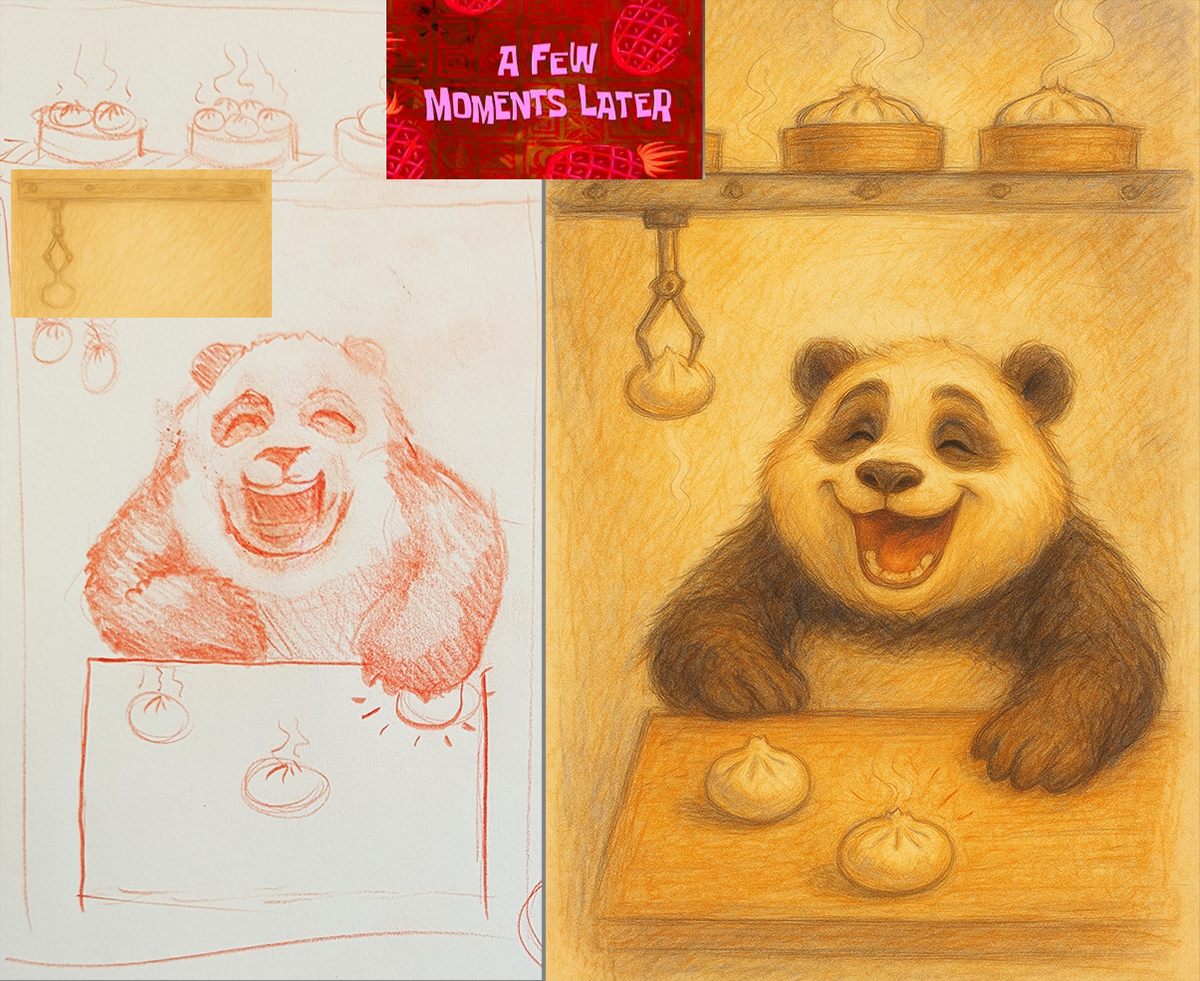
I fed my Panda sketch into the AI program and prompted up what I would do for a digital second pass.
Clean up the rough drawing. Keep it sketchy & color minimal. Refine the art style and character appeal that I’m envisioning.
I wasn’t asking AI to invent something for me. I already had the idea and a visual starting point. I was using it to get from an idea on paper to what it might actually look like much faster than I could have otherwise.
Some results were useful. Others weren’t.
That was fine. The speed made it cheap to explore.
Bringing it Back – Artist 2nd Pass
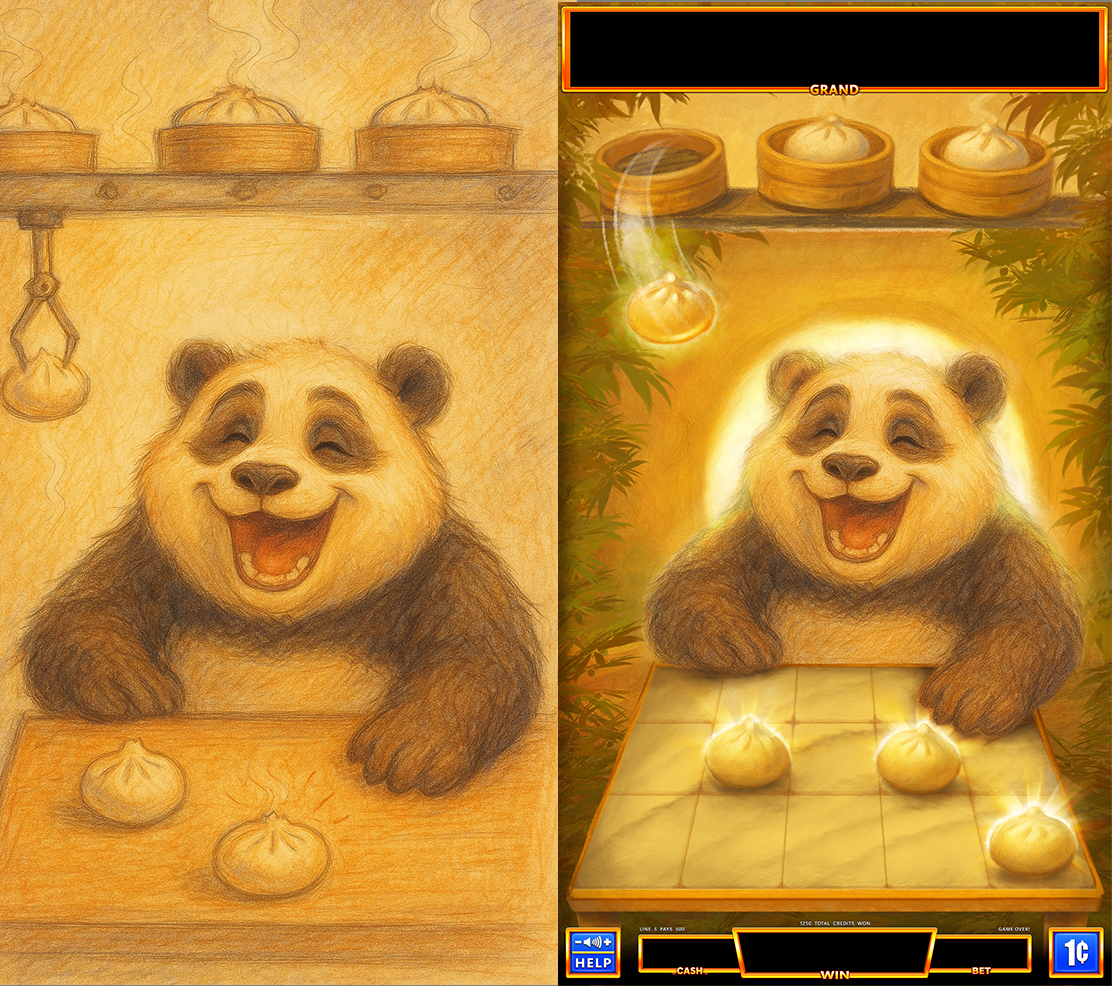
Once I had a Panda I liked, I brought him back into Photoshop.
I added our template game UI, built the marble reel/table for the baozi, created a nice pencil hatching PS brush to keep that nice texture going, painted in bamboo, the glowing moon-gate background, and some early VFX ideas around the buns.
That became the basic idea: Start with Art. Enhance with AI. Rinse & Repeat.
Or, another version I liked:
Sketch. Collaborate. Elevate.
What would it look like with a different character in the same style? Let’s use AI to test if the appeal is any better with… a tiger? How about a lil’ baby?
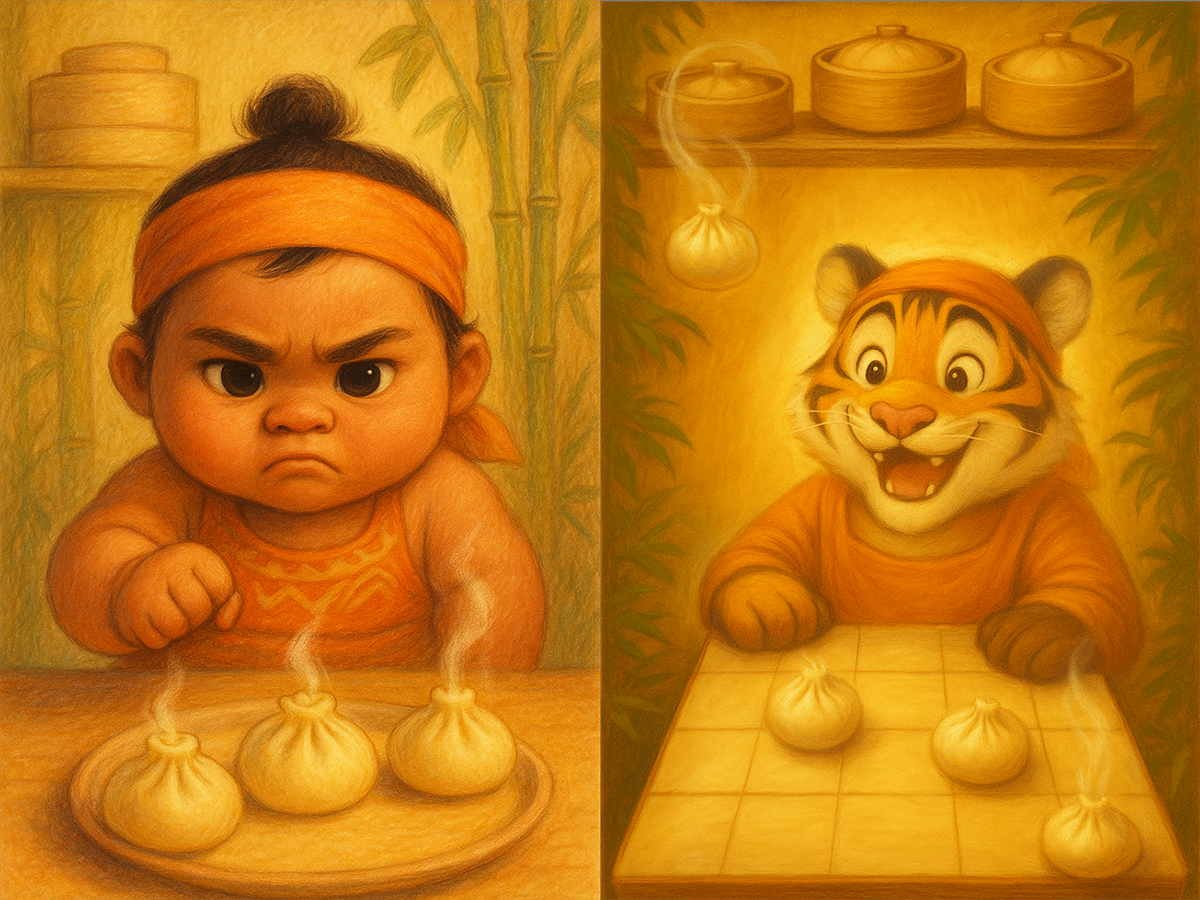
woah baby. they’re all yours. relax. walking away now.
From Experiment to Workflow
Once I found something useful, I started sharing it with the team. I demoed the approach to some of the art team, and we began testing where AI could fit into the way we worked.
The best results came when the artist stayed involved throughout: start with their own drawings or ideas, use AI to explore or refine them, then bring the results back into the artist’s hands. That loop could continue into storyboards, model sheets, turnarounds, mouth shapes, and other production prep.
That became the pattern that felt right:
Artist – AI – Artist – AI – Artist….
AI was augmenting our craft, opening up new possibilities in speed, quality, iteration, and style exploration. With market experience & good judgement, this combo is super effective.
What I Learned
AI image generation has grown incredibly quickly, and it will keep changing what artists and non-artists alike are able to do.
I’ve watched people across several disciplines use it to make visual suggestions, explore ideas, or even try to art direct from the side. Tasks that once required someone in the art discipline to actually make the image can suddenly be attempted by almost anyone …and sometimes attempted very poorly.
AI is great at what it does: creating images quickly. That doesn’t mean it has good taste, follows direction well, understands feedback, maintains consistency, or knows what you’re actually trying to accomplish.
It’s a double-edged sword. It needs process, judgment, and a thoughtful hand around it. Used without those things, it can break a pipeline in all kinds of interesting ways:
- Art can suddenly outrun everyone else. If preproduction is moving several times faster, can Game Design, Engineering, Tech Art, and Production actually keep pace? What happens to milestone planning when one discipline is suddenly far ahead of the others?
- Who is actually directing the art? If anyone can generate a convincing-looking image, what guardrails make sure visual direction is still being shaped by people who understand composition, hierarchy, player communication, style, and production needs?
- Is the work legally defensible? How are copyright, source material, plagiarism, confidentiality, and ownership being considered?
- Can you still iterate? How do you respond to feedback while keeping characters, designs, and style consistent?
- Polish can arrive before thought. An image can look “done” before the underlying design has really been solved. Nice rendering can hide weak composition, bad hierarchy, poor color relationships, over-detailing, or a visual direction that simply isn’t doing its job.
Game art isn’t just about making an attractive image. It has to support the design, reinforce features, guide the player’s attention, communicate what’s important, and work as part of the game.
At the same time, AI can be a fantastic Art Direction tool:
- Vet an idea visually before giving it as direction or feedback.
- Create faster paintovers and visual callouts.
- Explore styles, moods, palettes, compositions, and directions much earlier.
- Help refine how a visual idea or piece of feedback is communicated.
- Check references and similarities more easily.
- Get to something we can actually judge much sooner, before a weak direction has absorbed weeks of production time.
We can get to useful decisions faster.
Explore before committing. Kill weak directions before spending weeks polishing them. Give artists and Art Directors more ways to test ideas while they’re still cheap to change. That’s where I’ve found AI most useful: not skipping the creative process, but moving through parts of it much faster.
Credit / Context
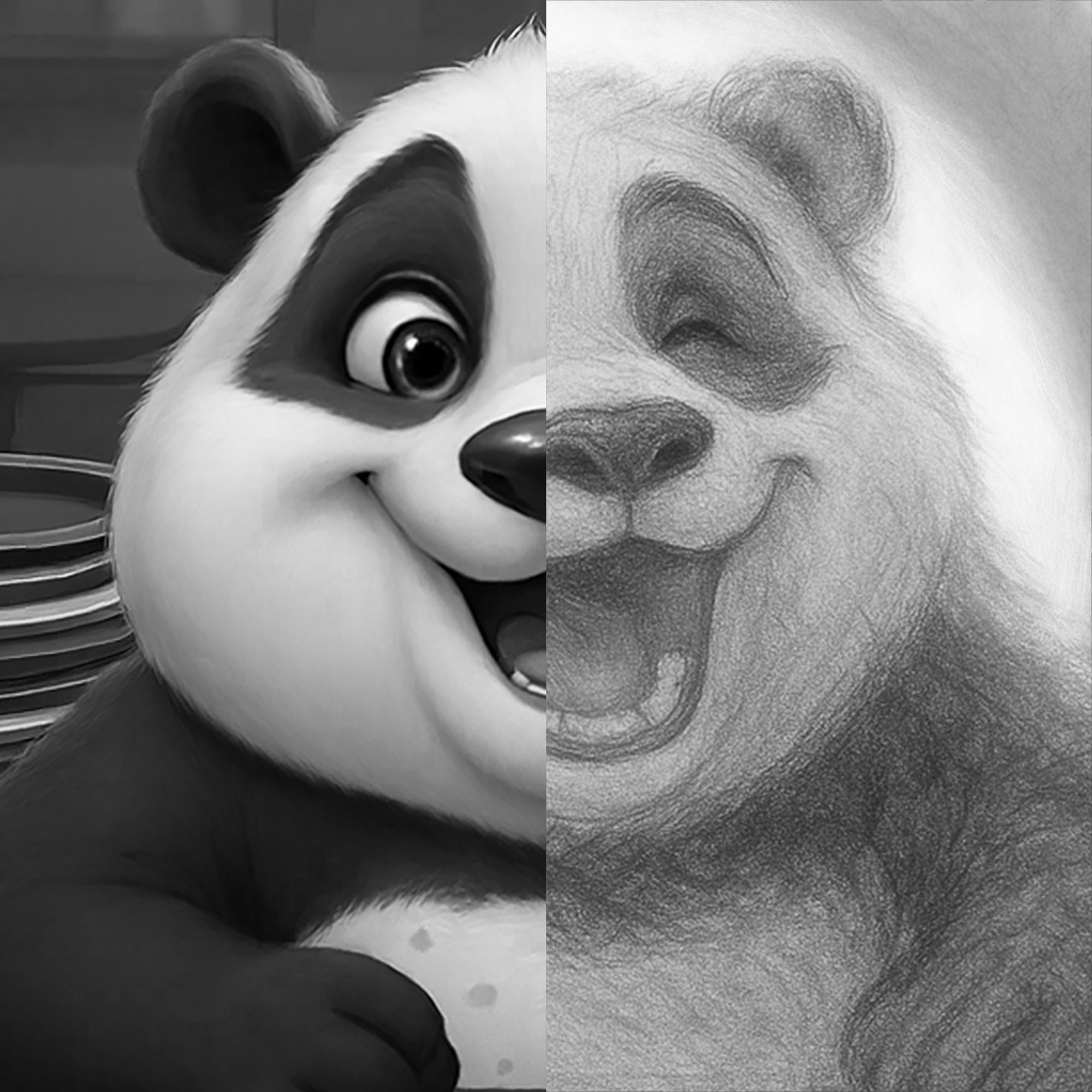
Artwork shared above is Copyright of IGT, and some are a collaborative effort.
NEXT CASE STUDY / LINK
use image
 PATRICK THOMPSON